
Hybrid meetings: why they still go wrong and what fixes them
 WOL Team · October 15, 2026 · Short read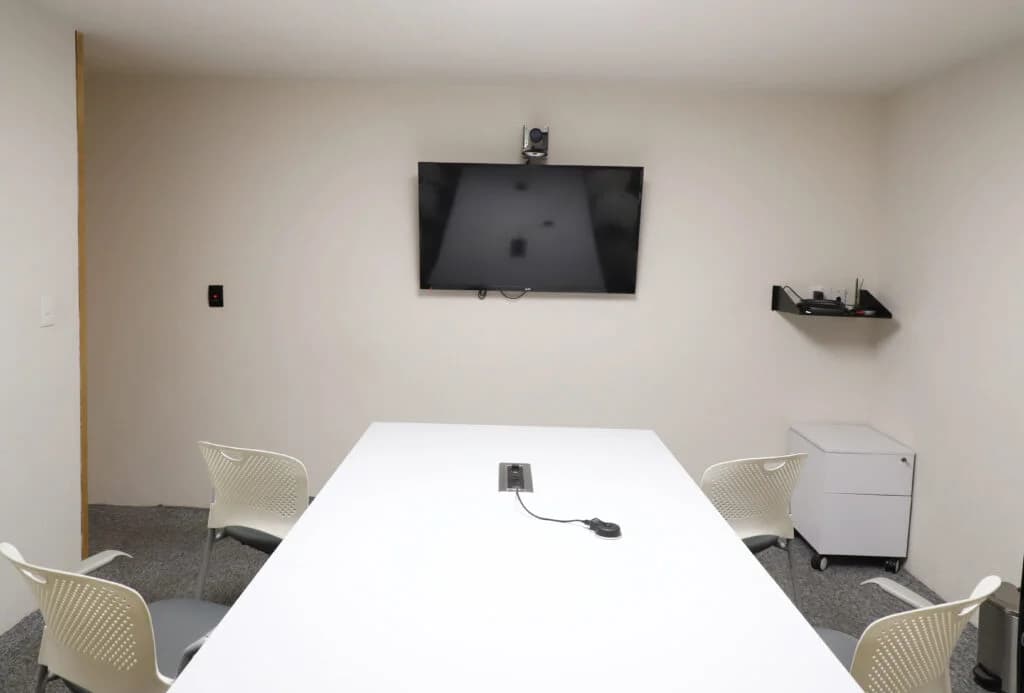
Hybrid meetings almost always fail on audio and moderation, not software. Fix them with an acoustically treated room, one microphone covering the whole table, and someone explicitly handing the floor to remote participants.
The pattern repeats: six people in the room, two on video, and twenty minutes in the two on screen have stopped speaking. It is not disinterest: they cannot hear well, they arrive late to every turn, and nobody asks them anything.
What actually fixes it
- One microphone covering the whole table, not the laptop of whoever called the meeting.
- A room whose surfaces do not bounce sound; echo is what exhausts the listener.
- The camera at eye level, not pointing at the ceiling from a laptop.
- A moderator who hands the floor by name to remote participants, at least once per topic.
- Sharing the document beforehand, so those outside the room do not depend on reading a screen.
The rule that helps most
If one person is remote, the meeting is remote for everyone. Each from their own device, even in the same building.
It sounds excessive and it is what levels the conversation most. When that is not possible, the alternative is booking a properly equipped room and giving someone the explicit job of bringing outsiders to the table.
Setting up the room in five minutes
- 1Test the audio before anyone arrives: call a colleague and have them speak from the far end of the table.
- 2Put the microphone in the middle and move anything that hums away from it: fans, laptops with spinning fans, bottles knocking together.
- 3Place the camera so the whole table fits; if only half fits, sit on the same side.
- 4Share the screen from one device and mute the rest of the people in the room to avoid feedback.
- 5Open with a quick round of introductions naming remote participants: establish from minute one that they are in the conversation.
The three moments where remote people are lost
- When someone draws on the whiteboard without describing what they draw.
- When two people in the room start a side conversation in low voices.
- When the meeting runs long and decisions get made standing up, off microphone.
The third is the most expensive: that is where things get agreed and where the remote participant finds out the next day, if at all. The discipline that fixes it is simple and hard to sustain: nothing is decided after the video call ends.
What to write down before closing
Close every hybrid meeting the same way: read out loud what was decided, who owns each item and by when. Thirty seconds. It sounds bureaucratic and it is the only moment where everyone — in the room and on screen — hears the same version of what just happened. Send that summary in writing the same day, in the same channel everyone uses, not in a document someone has to go looking for.
If your team meets this way every week, book a room that is set up for it rather than improvising in whatever space is free. The cost per hour is smaller than the cost of three people repeating a decision that half the participants never heard.
Frequently asked questions
- Do I need expensive equipment for a hybrid meeting?
- No. A decent table microphone and a room without echo solve most of it. Budget goes further on audio than on screens.
- How long should a productive hybrid meeting be?
- Shorter than an in-person one. Attention on video runs out sooner, so keep the agenda short and blocked.
Ready to take the next step?
Discover our spaces in Morelia and Querétaro and book a tour or your Day Pass.
Keep reading
- Eight things to check before signing up for coworking (that no tour will show you)The tour always looks good. These are the questions that separate a space that works from one that gets in the way.
- Registered fiscal address in Morelia: what it is, what the SAT asks for, and how to get oneWhat you need to register a fiscal address in Morelia, how it differs from a commercial address, and what the tax authority checks when it verifies.
- Fiscal address in Querétaro: requirements and how to get oneWhat you need for a fiscal address in Querétaro without leasing a whole floor, what the tax authority asks for, and what to check before signing.